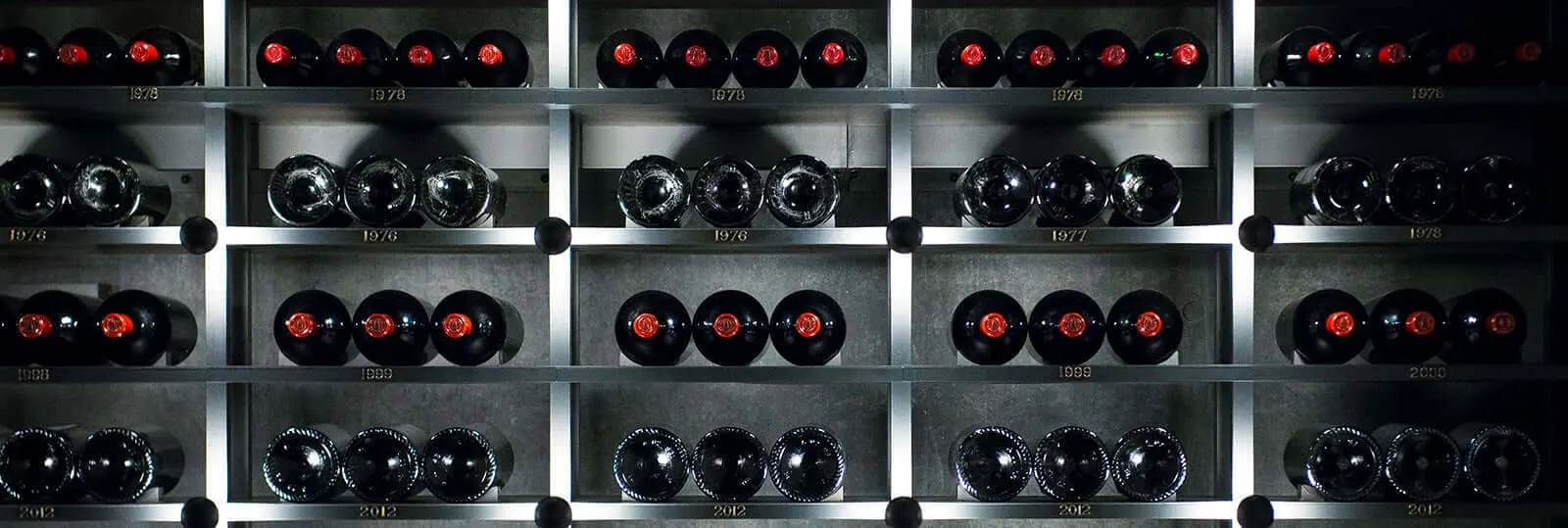
A magnum of Champagne coming out of the pantry on a tray changes the mood of a table. Guests photograph it, the owner usually has something to say about it, and the service becomes a small piece of theatre. Large format bottles are one of the few provisioning choices that serve the guest experience and the wine at the same time. They are also awkward to store, slow to chill and heavy to pour, so it pays to know what you are ordering before the case arrives.
The sizes, and what they hold
Names for large bottles vary by region, which causes a surprising amount of confusion at ordering time. Always check the volume in centilitres or litres rather than relying on the name. As a guide:
- Half bottle, 37.5cl: about three glasses. Useful for dessert wine and a single table.
- Standard bottle, 75cl: about six glasses.
- Magnum, 1.5 litres: two bottles, ten to twelve glasses. The most practical large format.
- 3 litres: four bottles. Called Jeroboam in Champagne and Burgundy, and Double Magnum in Bordeaux.
- 4.5 litres: six bottles, a Réhoboam in Champagne.
- 6 litres: eight bottles. Methuselah in Champagne and Burgundy, Impériale in Bordeaux.
- 9, 12 and 15 litres: Salmanazar, Balthazar and Nebuchadnezzar. Showpieces, not working bottles.
On a yacht, the realistic working range is the half bottle to the 3 litre bottle, with 4.5 and 6 litres kept for a specific occasion. You can browse by size in our 150cl, 300cl and 450cl collections, and the 37.5cl range for the other end.
Why they are worth the trouble
They look like an occasion
A magnum on ice at a welcome reception tells guests that someone has thought about the evening. For a birthday, an anniversary or a first night, it does more than an extra standard bottle ever could.
They tend to age more slowly
A larger bottle holds more wine relative to the small amount of air under the cork. Producers and collectors generally believe that this slows development, which is why magnums of fine Champagne, Bordeaux and Burgundy are sought after for long keeping. It is a tendency and not a guarantee, and storage matters more than size, but for a cellar you intend to drink over a decade a magnum is a sensible choice.
They reduce clutter at a busy service
Pouring twelve glasses from one bottle means fewer corks, fewer ice buckets and fewer trips to the pantry during a crowded reception. For parties of twenty or more, our planning figures for a villa party suggest taking at least part of the Champagne in magnums, and the same logic applies on deck.
Practical points on board
Storage
Standard racks are cut for 75cl bottles, and a magnum will not fit. A 1.5 litre bottle weighs around three kilograms and a 3 litre bottle can reach five or more, so it must be secured against roll and not simply laid on a shelf. Give large formats their own bin, with padding, in the coolest part of the store, and keep them away from the vibration of the engine room. Our guide to storing wine on your yacht covers the basics of light, humidity and temperature.
Chilling
This is the point that catches people out. A magnum has to be chilled for noticeably longer than a standard bottle, and a 3 litre bottle longer still. Use a deep container with plenty of ice and a good amount of water, turn the bottle occasionally, and start well before service. Allow an hour or more for a magnum that begins at cellar temperature, and plan the timing in the service brief. Our guide to serving temperatures and chilling sets out the method in detail.
Opening and pouring
The cork in a large bottle is under real pressure and is bigger and tighter than the one in a standard bottle. Keep the bottle cold, hold the cork firmly as you ease it out, and keep the bottle angled away from guests. Pouring from a magnum is a two handed job, with a folded napkin to steady the neck. Bottles above 3 litres benefit from a cradle. Please leave sabrage to a standard bottle and an experienced hand; the story of that technique is in our sabrage article.
Presenting a large bottle at the table
The point of a magnum is the moment of presentation, so rehearse it. Chill the bottle properly, wrap the base in a folded napkin, show the label to the host, open it quietly and pour the first glasses from the host's right. Have a second bottle in the pantry in case the party is bigger than expected, since a magnum that is empty before the table is served is a poor ending to a good gesture. Photographs of the bottle in its bucket are almost guaranteed, so make sure the bucket and the surrounding table look as good as the bottle.
Which size for which moment
- Dinner for six to eight: one magnum of a good red or white shared across the table is often better than several standard bottles.
- Welcome reception for ten to twenty: a magnum or two of Champagne, with standard bottles in reserve.
- Anniversary or milestone: a 3 litre bottle, ordered in good time and chilled all day.
- Everyday service: stay with standard bottles. Large formats are for moments, not for routine.
Ordering large formats
Not every wine is made in every size, and the best large format bottles can sell out. For Champagne, houses such as Bollinger, Ruinart, Krug and Veuve Clicquot list magnums of some of their cuvées, and the main Champagne collection shows what is available. If you want a particular wine in a particular size, tell us the date as early as you can, because a rare format is harder to find than a standard bottle and the answer is better given with notice.
Frequently asked questions
How many glasses are in a magnum?
A magnum holds 1.5 litres, which pours ten glasses at 150ml or twelve at 125ml.
Does Champagne taste better from a magnum?
Many people find that Champagne from a magnum tastes fresher and develops more slowly, because there is less air relative to the wine. The effect is real but modest, and good storage matters more.
How long does a magnum take to chill?
Allow an hour or more in ice and water, longer for a 3 litre bottle. Start earlier than you think, and avoid using the freezer, which risks a burst bottle.
What is the best large format for a yacht?
The magnum. It is large enough to impress, manageable to store and pour, and it fits the pace of most onboard service.