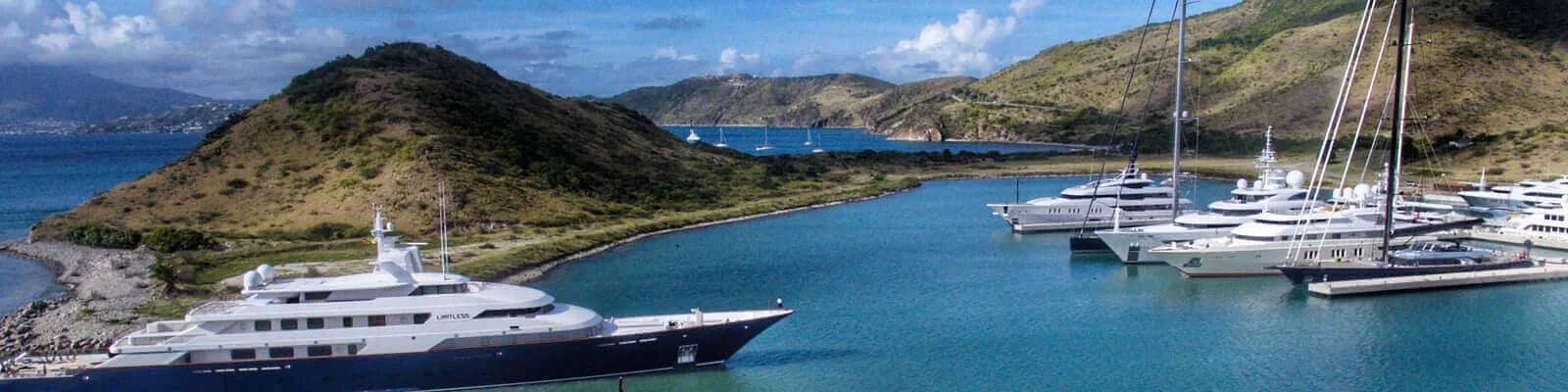
Every autumn a large part of the Mediterranean fleet turns west, and every autumn the same question lands on the chief stewardess's desk: what do we do about the wine? The cellar has been built up over a season, some of it is for the owner, some for charter guests, and a good deal of it is not at all suited to two weeks of Atlantic swell followed by a Caribbean winter. This guide sets out how to decide what sails, what stays ashore and what should be drunk, sold or replaced before you leave.
Why a crossing is hard on wine
Wine does not mind a little motion. What it dislikes is a combination that a crossing delivers in full: temperatures that climb as you head south, a lazarette or crew store that was never designed as a cellar, constant low-level vibration from the engines and generators, and weeks with no chance to check on anything. Heat is the one that does lasting damage. Above about 25 degrees the chemistry of wine speeds up, fruit fades and the wine tastes cooked. Once that has happened it cannot be reversed.
The Caribbean adds a second problem. Ambient temperatures stay high all winter, so a store that coped in the Mediterranean in April may be several degrees too warm in Antigua in January.
Sort the cellar into three groups
1. What sails
Wines that are robust, young and meant to be drunk within the season. Structured reds from warmer regions, crisp whites that are not fragile, rosé for the charter list, Champagne you intend to serve, and spirits, which travel better than almost anything else. If a bottle will be poured in the next few months and does not carry great age, it can usually go.
2. What stays ashore
Anything old, fragile or valuable that has no business spending a winter in the tropics. That includes mature Burgundy and Bordeaux, older vintage Champagne, large formats that take up space and are hard to keep cool, and any wine that is in a drinking window you want to protect. These belong in proper cellar conditions, at a steady 12 to 14 degrees and 60 to 75 per cent humidity, which is exactly what a yacht cannot reliably offer during a crossing. We keep clients' wine in climate-controlled storage near Antibes, documented in and out and insured, and the details are on our yacht cellar management page.
3. What gets drunk, sold or retired
Every cellar has bottles that should have been poured a year ago. A crossing is a good deadline. Move them to the front, serve them on the last Mediterranean charters, or take them out of the record altogether. Our checklist of common cellar mistakes is a useful audit to run first.
Prepare the cellar before you leave
- Count and record. Do a full inventory the week before departure, with bin positions, and photograph the racks. The record you hand to the next stewardess starts here.
- Pack for movement. Bottles should never lie loose. Use racks with positive retention, or wedge cases tightly so nothing can shift. Large bottles need their own secure position.
- Choose the coolest space. Often it is a low, central, shaded area away from the engine room and the galley. Measure it, do not guess: a cheap temperature logger left for a week shows the real range.
- Keep the Champagne cold. Fridges and wine coolers should be checked and serviced before you go, because a failed unit in the first week of a crossing cannot be fixed until port.
- Secure the paperwork. Wine and spirits that leave the European Union on board, and later return, raise customs questions. Ask your agent before the return passage, not at the dock. Our overview of VAT and duty on yacht wine explains the principles.
Arrival: let the wine rest
After a long passage, resist the urge to pour the best bottle on the first night. Wines that have been shaken for two weeks often taste dull or disjointed for a few days, and older bottles may have disturbed sediment. Leave anything of quality to rest upright or on its side, in a cool place, for several days before service, and keep a temperature log from day one in the new port.
Restocking on the other side
The simplest way to lighten the crossing is to carry less and restock when you arrive. We supply yachts through our Caribbean network, and the pages for Antigua, Saint Martin and Saint Barthélemy, Saint Kitts, Grenada and the British Virgin Islands show how an order is planned and delivered. A sensible arrangement is to send a short list of what you need for the first charter weeks, keep the best wines ashore in Antibes, and rebuild the working cellar locally.
Do not forget the crossing itself
A crossing is also a celebration, and the crew will want something for landfall. Keep a few bottles of Champagne or a good sparkling wine aside, stored cold and secured, and agree with the captain in advance what may be opened and when. It is a small point, but a crew that has a proper toast on arrival returns to guest service in better spirits, and a plan made before departure avoids an argument at sea.
A simple timeline
- Six weeks out: decide what sails, stays and goes. Send the owner's list to be approved.
- Three weeks out: arrange collection of the wines that will stay ashore, and place the Caribbean restock order.
- One week out: final inventory, photographs, loggers in place, racks secured.
- On arrival: record, rest, check temperatures, then rotate the new stock to the front.
Frequently asked questions
Is it safe to cross the Atlantic with fine wine on board?
It can be, if the wine is robust, the storage is cool and secured, and you accept some risk. For old or valuable bottles, ashore storage in stable conditions is the safer choice.
How long should wine rest after a crossing?
A few days is sensible for ordinary wines, and a week or more for older or fine bottles. Keep them still and cool while they settle.
Do spirits travel well?
Yes. Sealed spirits are far more stable than wine and are the least risky part of a crossing cellar, although heat and strong light should still be avoided.
Can you deliver wine to Caribbean ports?
Yes. We supply yachts in several Caribbean ports. Tell us the port and dates and we will plan the order and the paperwork around them.