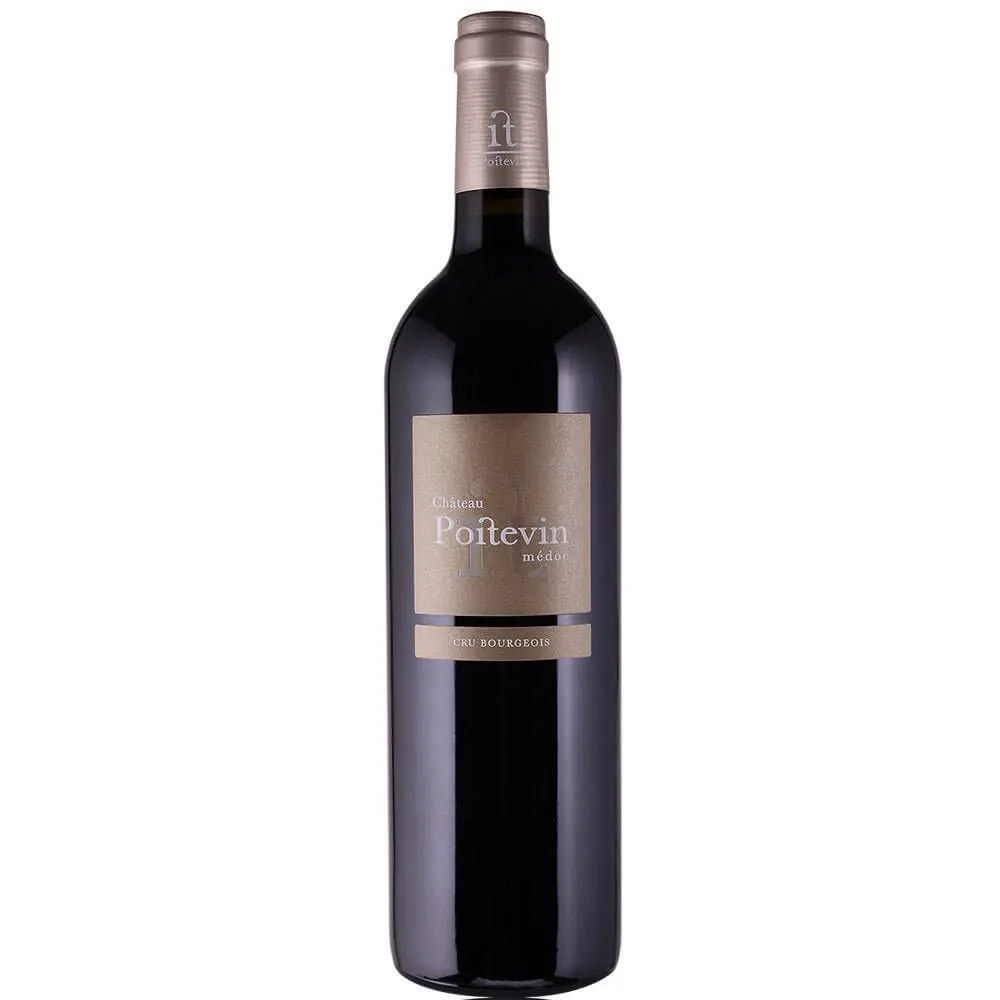
Château Poitevin - Cru Bourgeois Médoc

90 RP Points
Château Poitevin - Cru Bourgeois Médoc - 2016 - 75cl - Onshore Cellars

Château Poitevin - Cru Bourgeois Médoc

Vintage
Size
Regular price €17.70
Price on application/
  • In stock
  • Inventory on the way
Tax included. Shipping calculated at checkout.

Tasting Notes

Loading tasting notes…

More information

Provenance
Type
Red
Country
Appellation
Producer
Technical
ABV
13.5%
Serving
16° - 18° C
Drinking
2022 - 2035
Food Pairings
BeefLambDuckCharcuterie and Cured MeatsMushroomsTruffle-Based DishesGrilled VegetablesBlue CheeseAged Cheeses
Key Characteristics
["Perfumed""Leafy""Elegant""Medium(+) alcohol""Medium-bodied""Medium acidity"]

Behind the bottle

Chateau Poitevin

Chateau Poitevin

Château Poitevin operates in the Médoc appellation of Bordeaux's Left Bank, producing red wines that reflect the region's maritime-influenced terroir. The Médoc encompasses a strip of land between...

Château Poitevin operates in the Médoc appellation of Bordeaux's Left Bank, producing red wines that reflect the region's maritime-influenced terroir. The Médoc encompasses a strip of land between the Gironde estuary and the Atlantic Ocean, where gravelly soils and moderate temperatures create favorable conditions for Bordeaux's traditional grape varieties.

The Médoc appellation, which sits below the more famous Haut-Médoc in the hierarchy, is characterized by its focus on approachable red wines that express the classic Bordeaux blend structure. The region's proximity to water bodies helps moderate temperature extremes, while the gravelly soils provide excellent drainage for vine roots. Wines from this appellation typically offer good aging potential while remaining accessible in their youth.

Château Poitevin's current offering includes a Cru Bourgeois Médoc that blends Cabernet Franc and Merlot with Pinot Meunier, an unusual addition to the traditional Bordeaux palette. The inclusion of Pinot Meunier, more commonly associated with Champagne production, suggests an unconventional approach to blending within the constraints of Médoc appellation rules.

Chateau Poitevin
Bordeaux - Onshore Cellars

Bordeaux

Bordeaux, in the southwest of France, needs little introduction as one of the world's most famous, prestigious and prolific wine regions. The majority of Bordeaux wines (nearly 90...
Bordeaux, in the southwest of France, needs little introduction as one of the world's most famous, prestigious and prolific wine regions. The majority of Bordeaux wines (nearly 90 percent of production volume) are the dry, medium- and full-bodied red Bordeaux Blends that established its reputation.

The finest (and most expensive) of these are the wines from the great châteaux of the Haut-Médoc and the Right Bank appellations Saint-Émilion and Pomerol. The former is focused (at the top level) on Cabernet Sauvignon, the latter pair on on Merlot.

The legendary reds are complemented by high-quality white wines based on Sémillon and Sauvignon Blanc. These range from dry whites to challenge the best from the Burgundy region (Pessac-Léognan is particularly renowned) to the sweet, botrytized nectars of Sauternes.
Explore Bordeaux
Médoc

Médoc

The Médoc appellation is located on the left bank of the Gironde estuary in Bordeaux, France. This large wine region extends northwest from the city of Bordeaux along...

The Médoc appellation is located on the left bank of the Gironde estuary in Bordeaux, France. This large wine region extends northwest from the city of Bordeaux along a narrow peninsula between the Gironde and the Atlantic Ocean. The appellation was officially established in 1936 and encompasses vineyards that fall outside the more specific communal appellations like Saint-Estèphe, Pauillac, Saint-Julien, and Margaux.

The Médoc benefits from a maritime climate moderated by the Atlantic Ocean and the Gironde estuary, which helps regulate temperatures throughout the growing season. The soils are predominantly gravel over clay and limestone subsoils, though they vary considerably across the region. Red wine production dominates, with Cabernet Sauvignon, Merlot, Cabernet Franc, and Petit Verdot being the primary permitted grape varieties. The region includes properties classified as Cru Bourgeois, a quality designation that recognizes estates producing wines above the basic appellation level.

Médoc wines typically display the structured, age-worthy characteristics associated with left bank Bordeaux, though they tend to be more accessible in their youth than wines from the prestigious communal appellations. The wines generally show good tannin structure with flavors of dark fruits, often complemented by earthy and herbal notes. The blending of grape varieties allows producers to create wines that balance power with elegance, making Médoc an important source of quality Bordeaux at various price points.

Read more