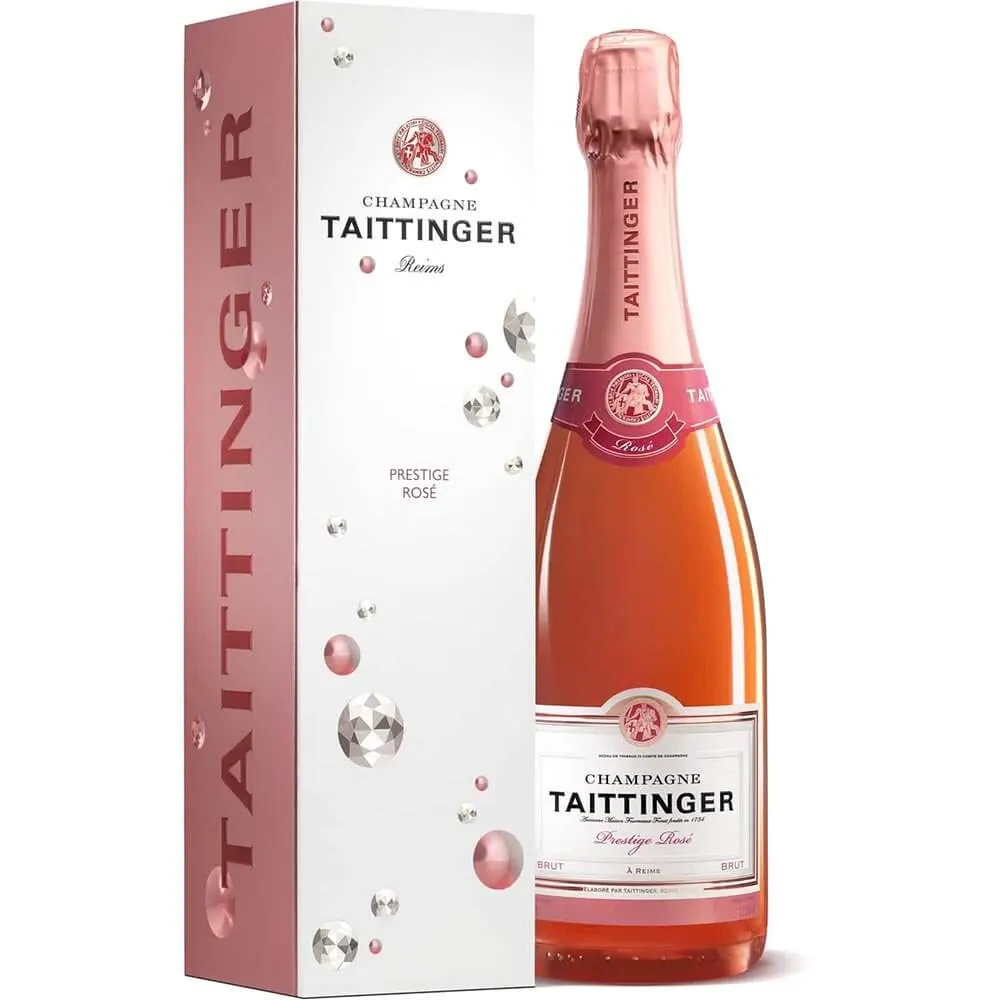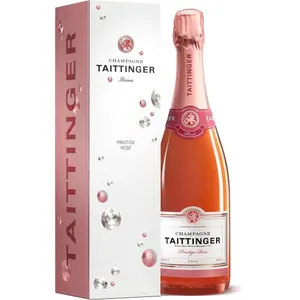
Taittinger - Prestige Rosé

95 RP Points
Taittinger - Prestige Rosé - NV - 75cl - Onshore Cellars

Taittinger - Prestige Rosé

Vintage
Size
Regular price 27.300 Ft
Price on application/
  • In stock
  • Inventory on the way
Tax included. Shipping calculated at checkout.

Tasting Notes

Loading tasting notes…

More information

Provenance
Type
Country
Appellation
Producer
Technical
ABV
12.5%
Serving
8° - 10° C
Food Pairings
ShellfishCrabLobsterSaladsBerries and Fresh FruitsTapas and Small Plates
Key Characteristics
RoseMedium alcoholMedium-bodiedMedium acidityBrutMedium intensity

Behind the bottle

Taittinger

Taittinger

Taittinger is one of the most famous Champagne brands in the world, and one of the largest wineries in the Champagne region. Founded in 1932 by Pierre Taittinger,...

Taittinger is one of the most famous Champagne brands in the world, and one of the largest wineries in the Champagne region. Founded in 1932 by Pierre Taittinger, the estate is located in Riems with vineyards covering approximately 290 hectares distributed across the Champagne appellation.

Pierre Taittinger, an officer and prominent politician in 1915, didn’t foresee a life in winemaking, but after being assigned to the chief of staff based at Château de la Marquetterie, Pierre Taittinger fell in love. He decided to buy the property and its surroundings from the wine house Forest-Fourneaux and start a family legacy.

François Taittinger, Pierre’s son, took over the family business in 1945 and forged the signature style of the house. He was responsible for making Chardonnay their flagship grape because he was convinced of the potential that this variety would have among the consumers in the 20th century. After his untimely death in 1960, his bother Claude started managing the company until 2005, when was sold to a private investment firm. The new ownership didn’t seem compatible with Taittinger’s standards of quality and it’s for this reason that the Taittinger Family decided to buy back ownership in 2006.

Taittinger’s aim has always been the pursuit of excellence, as Pierre Emmanuel Taittinger, current Honary Chairman, sates:

“Having our family name on a bottle places demands and responsibilities on every minute. The name on the bottle conveys both the skills and knowledge of the past and a commitment to the future”.

Taittinger
Our collection of Champagne - Find this at Onshore Cellars your yacht wine supplier

Champagne

In 1668, Dom Pérignon is said to have discovered how to make sparkling wine; today his technique is used the world over, although Champagne continues to make some...

In 1668, Dom Pérignon is said to have discovered how to make sparkling wine; today his technique is used the world over, although Champagne continues to make some of the finest. France’s most northerly wine region, Champagne is now home to 15,000 growers and 290 ‘houses’. A blend of grape varieties is usually required: white Chardonnay to add fruit and elegance, and two reds – Pinot Noir and Pinot Meunier – to provide body and backbone.

Explore Champagne
Champagne

Champagne

Champagne is a region in northeastern France, approximately 140 kilometers northeast of Paris, defined by strict geographic boundaries established under French appellation law. The region's cool continental climate...

Champagne is a region in northeastern France, approximately 140 kilometers northeast of Paris, defined by strict geographic boundaries established under French appellation law. The region's cool continental climate and chalky soils create conditions uniquely suited to sparkling wine production. The designation "Champagne" is legally protected and applies only to wines produced within these delimited boundaries using prescribed methods.

The region's chalky subsoil—composed largely of Cretaceous limestone—drains rapidly and reflects heat, helping to ripen grapes despite the cool climate. Three grape varieties dominate: Chardonnay, Pinot Noir, and Pinot Meunier, often blended together though Blanc de Blancs wines use Chardonnay exclusively. Champagne's signature method involves a secondary fermentation in bottle (méthode champenoise), where yeast and sugar create carbonation and develop complex flavors over time. Extended aging on the lees further develops texture and aromas. Producers classify vineyards into Premier and Grand Cru designations based on historical quality assessments, and finished wines are labeled by dosage level—ranging from Extra Brut (bone dry) through Brut, Sec, and Demi Sec (progressively sweeter).

Champagne wines are characterized by high acidity, fine bubbles, and layered complexity. Typical flavor profiles include green apple, citrus, and chalk minerality in younger or lighter expressions, evolving toward brioche, toast, and honey notes with bottle age. The interaction between the wine's acidity, the persistent effervescence, and the autolytic characters from yeast aging creates distinctive textural finesse that distinguishes Champagne from other sparkling wines produced elsewhere.

Read more