
- Robert Parker (RP) points
- Vinous points
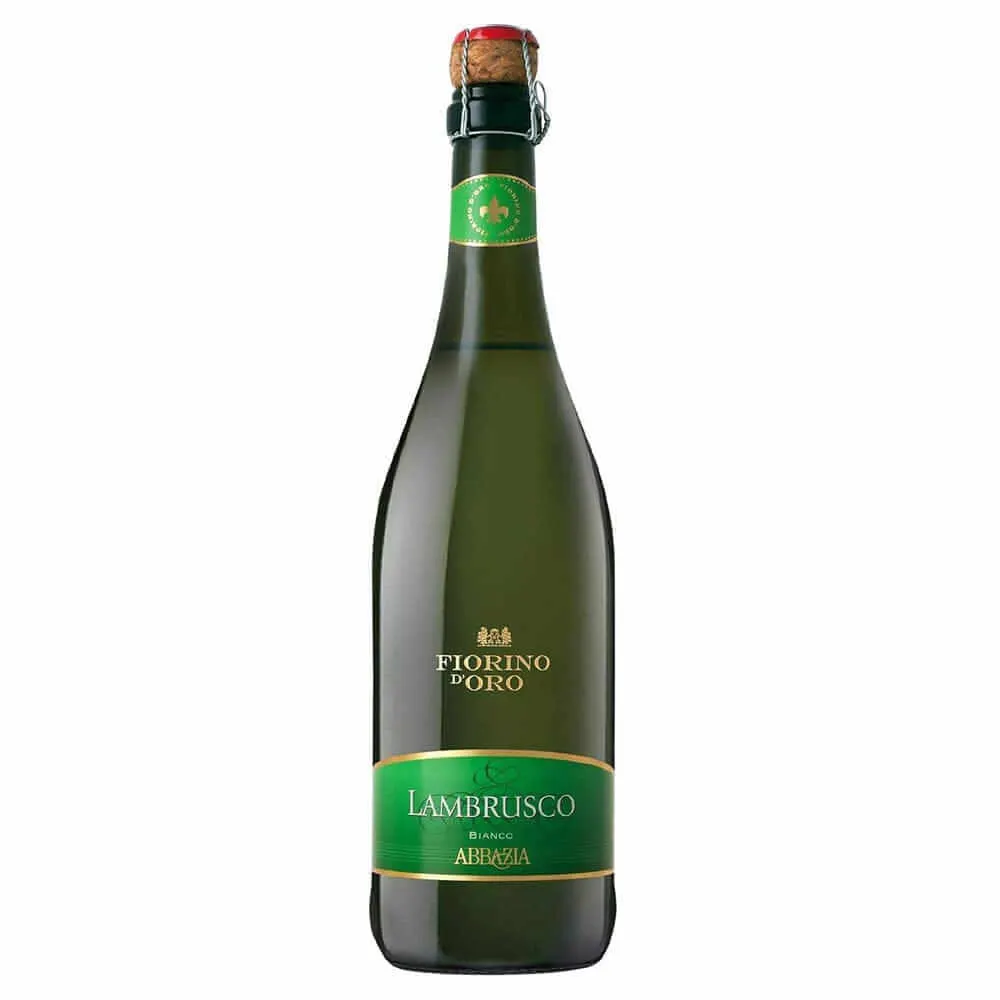
Fiorino d'Oro - Lambrusco Bianco
Vintage
Size
Price
€14.40 ex. VAT
In stockIn stock
Tasting notes
Clear yellow colour with an evanescent froth. Fruity, delicate aroma, with floral notes. Fresh taste, sweet and harmonious. Soft taste tending to sweet. Well-balanced with lighter alcoholic tenor.
More information
Provenance
- Type
- Sparkling
- Producer
- Fiorino d'Oro
- Country
- Italy
- Region
- Emilia-Romagna
Technical
- Vintage
- NV
- Grapes
- Rare Red Blend
- ABV
- 12%
- Size
- 75cl
- Ageing
- Serving
- 8° - 10° C
- Drinking window
Food pairings
Key characteristics
About this sparkling wine
Fiorino d'Oro is a renowned producer of Lambrusco Bianco, a white wine that is made from the Lambrusco grape variety. The history of this producer dates back to the early 20th century when the founder, Giovanni Fiorino, started making wine in the Emilia-Romagna region of Italy. Today, the company is run by the third generation of the Fiorino family, who continue to produce high-quality wines that are enjoyed by wine enthusiasts around the world.
The Lambrusco Bianco produced by Fiorino d'Oro is a refreshing and crisp wine that is perfect for warm summer days. The grapes used to make this wine are carefully selected and harvested by hand to ensure that only the best quality fruit is used. The wine is then fermented in stainless steel tanks at a controlled temperature to preserve its delicate aromas and flavours.
One of the unique features of Fiorino d'Oro's Lambrusco Bianco is its production method. Unlike other Lambrusco wines, which are typically made using the Charmat method, this wine is made using the traditional method, which involves a secondary fermentation in the bottle. This gives the wine a fine and persistent perlage, as well as a complex and elegant flavour profile.
In terms of taste, Fiorino d'Oro's Lambrusco Bianco is characterised by its floral and fruity aromas, with notes of white peach, pear, and citrus. On the palate, the wine is dry and crisp, with a refreshing acidity that makes it a perfect pairing for seafood, salads, and light pasta dishes.
Overall, Fiorino d'Oro is a producer that is dedicated to producing high-quality wines that showcase the unique terroir of the Emilia-Romagna region. Their Lambrusco Bianco is a testament to their commitment to excellence, and is a must-try for anyone who appreciates fine Italian wines.
Behind the bottle

Region
Emilia-Romagna
Emilia-Romagna stretches across northern Italy from the Adriatic coast to the Apennine Mountains, forming one of the country's most productive agricultural regions. The area encompasses two distinct historical territories…
Explore Emilia-Romagna