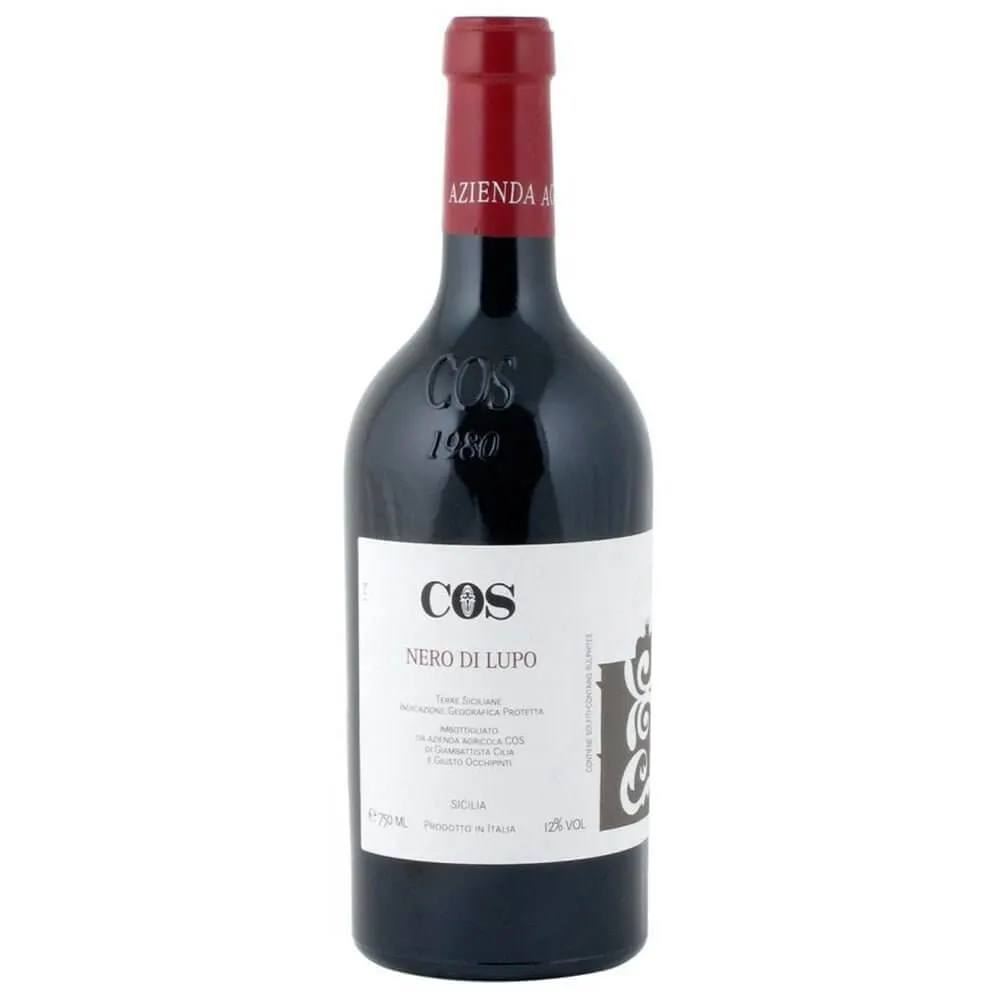
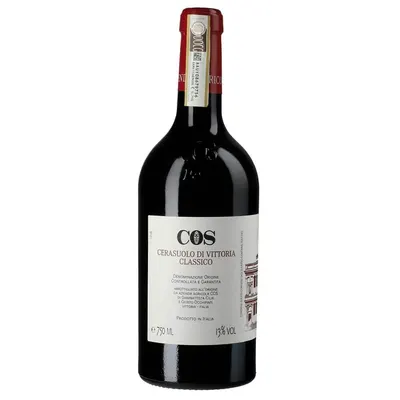
Cos - Nero di Lupo - Sicilia IGT

91 RP Points
Cos - Nero di Lupo - 2018 - 75cl - Onshore Cellars

Cos - Nero di Lupo - Sicilia IGT

Vintage
Size
Regular price €22.20
Price on application/
  • 2 in stock
  • Inventory on the way
Tax included. Shipping calculated at checkout.

Tasting Notes

Loading tasting notes…

Loading tasting notes…

More information

Provenance
Type
Red
Country
Appellation
Technical
Grapes
ABV
11%
Serving
16° - 18° C
Food Pairings
Grilled MeatsBeefLambDuckRoast ChickenPasta DishesAsian CuisineTomato-Based DishesSaladsChilisCheese and Charcuterie Boards
Certifications
Bio (Organic)

Behind the bottle

Azienda Agricola Cos - Onshore Cellars

Azienda Agricola Cos

Cos Viticoltori is a renowned wine producer located in the heart of Sicily, Italy. The winery was founded in 1980 by three friends who shared a passion for...

Cos Viticoltori is a renowned wine producer located in the heart of Sicily, Italy. The winery was founded in 1980 by three friends who shared a passion for winemaking and a desire to showcase the unique terroir of the region. Today, Cos Viticoltori is known for producing some of the finest natural wines in Italy.

The winery's philosophy is rooted in the principles of biodynamic farming, which emphasizes the importance of working in harmony with nature. The vineyards are cultivated without the use of chemicals or synthetic fertilizers, and the grapes are harvested by hand to ensure the highest quality.

Cos Viticoltori produces a range of wines, including red, white, and rosé. The red wines are made from indigenous grape varieties such as Nero d'Avola and Frappato, and are known for their rich, complex flavors and aromas. The white wines are made from the local grape variety, Insolia, and are characterized by their crisp acidity and citrus notes. The rosé is made from a blend of Nero d'Avola and Frappato, and is a refreshing and fruity wine.

The winery's flagship wine is the Cerasuolo di Vittoria, a red wine made from a blend of Nero d'Avola and Frappato grapes. This wine is aged in oak barrels for 12 months, which gives it a rich, complex flavor profile with notes of dark fruit, spice, and vanilla.

Cos Viticoltori's commitment to quality and sustainability has earned them numerous accolades over the years. Their wines have been featured in top wine publications such as Wine Spectator and Decanter, and have won awards at prestigious wine competitions around the world.

Overall, Cos Viticoltori is a must-visit for anyone interested in natural wines and biodynamic farming. Their wines are a true reflection of the unique terroir of Sicily, and are sure to impress even the most discerning wine connoisseur.

Azienda Agricola Cos
Our collection of Sicily - Find this at Onshore Cellars your yacht wine supplier

Sicily

Sicily is the largest island in the Mediterranean Sea and Italy's southernmost wine region, separated from the mainland by the narrow Strait of Messina. The island has undergone...

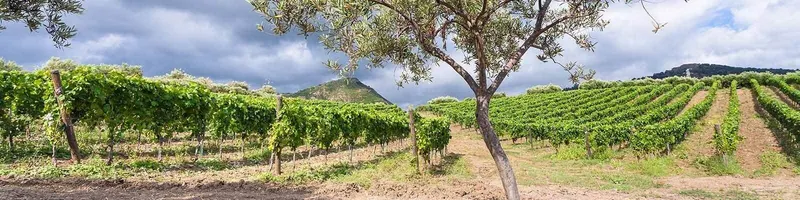
Sicily is the largest island in the Mediterranean Sea and Italy's southernmost wine region, separated from the mainland by the narrow Strait of Messina. The island has undergone a remarkable transformation over the past three decades, evolving from a source of bulk wine for blending into one of Italy's most dynamic quality wine regions. This shift has been driven by both international investment and local producers embracing modern winemaking techniques while working with indigenous grape varieties.

The island's diverse topography ranges from volcanic soils around Mount Etna in the northeast to limestone and clay formations across the interior and western coastlines. Sicily's Mediterranean climate features hot, dry summers and mild winters, though significant variation exists due to elevation and proximity to the sea. The Etna DOC, situated on the slopes of Europe's most active volcano, represents Sicily's most prestigious appellation, benefiting from volcanic ash soils, high altitude vineyards, and cooling influences that create ideal conditions for elegant wines.

Sicily's wine identity centers on indigenous varieties, particularly the white Grillo, Carricante, and Catarratto, alongside the red Nero d'Avola and Nerello Mascalese. Carricante and Nerello Mascalese thrive in Etna's volcanic terroir, producing wines with distinctive minerality and aging potential. International varieties like Chardonnay have also found success, particularly in warmer coastal areas. The region produces everything from crisp, mineral-driven whites to structured reds, with the volcanic soils of Etna contributing a characteristic salinity and complexity that distinguishes Sicilian wines in the broader Italian landscape.

Explore Sicily
Sicilia IGT

Sicilia IGT

Sicilia IGT is a broad designation covering the entire island of Sicily in southern Italy. Established as an Indicazione Geografica Tipica (IGT) classification, it permits considerable flexibility in...

Sicilia IGT is a broad designation covering the entire island of Sicily in southern Italy. Established as an Indicazione Geografica Tipica (IGT) classification, it permits considerable flexibility in winemaking compared to more strictly regulated appellations, allowing producers to experiment with both traditional and international grape varieties across Sicily's diverse terroirs.

Sicily's Mediterranean climate is characterized by hot, dry summers and mild winters, with coastal and inland microclimates creating distinct growing conditions. The island's soils vary significantly—from volcanic terrain in the eastern regions around Mount Etna to limestone and clay-based soils in the western and central areas. The Sicilia IGT designation encompasses all of these varied zones, permitting a wide range of grape varieties and winemaking approaches, from indigenous Sicilian cultivars like Nero d'Avola to international varieties and blends.

Nero d'Avola, Sicily's most significant native red grape, produces wines with characteristic dark fruit intensity, moderate to good acidity, and often spicy or herbaceous notes. Wines from this variety grown under the Sicilia IGT designation tend toward approachable, fruit-forward profiles that reflect the island's warm climate while retaining sufficient structure for food pairing. The appellation's permissive framework has made it attractive to quality-focused producers seeking to craft distinctive expressions beyond the constraints of more geographically specific designations.

Read more